HMNT 2009
I love Harvard-MIT Math Tournaments. I like the mini-events, especially when I learn a new game. I also like the guts round, where I enjoy the adrenaline rush of watching the progress in real time. I also like the fact that I know many of the kids from different teams: my current students, my former students, the members of my club, my Sergei’s friends.
The problems for the competitions are designed by undergraduate students at MIT and Harvard. Kudos to them. Still, I was somewhat disappointed with the November 2009 problems. Most problems are variations of standard problems with different parameters. It is not easy to design a problem, but I was hoping for something fresh.
My favorite problem from the HMNT 2009 tournament was in the theme round:
There are five guys named Alan, Bob, Casey, Dan, and Eric. Each one either always tells the truth or always lies. You overhear the following discussion between them:
- Alan: “All of us are truth-tellers.”
- Bob: “No, only Alan and I are truth-tellers.”
- Casey: “You are both liars.”
- Dan: “If Casey is a truth-teller, then Eric is too.”
- Eric: “An odd number of us are liars.”
Who are the liars?
My second favorite problem was in the guts round:
Six men and their wives are sitting at a round table with 12 seats. These men and women are very jealous — no man will allow his wife to sit next to any man except for himself, and no woman will allow her husband to sit next to any woman except for herself. In how many distinct ways can these 12 people be seated such that these conditions are satisfied? (Rotations of a valid seating are considered distinct.)
This was the funniest problem:
You are trapped in ancient Japan, and a giant enemy crab is approaching! You must defeat it by cutting off its two claws and six legs and attacking its weak point for massive damage. You cannot cut off any of its claws until you cut off at least three of its legs, and you cannot attack its weak point until you have cut off all of its claws and legs. In how many ways can you defeat the giant enemy crab? (Note that the legs are distinguishable, as are the claws.)
It is difficult to arrange so many problems for four rounds without mistakes. The error in the following problem is not a typo and it bothers me that no one caught it:
Pick a random digit in the decimal expansion of 1/99999. What is the probability that it is 0?
Hey, there is no uniform distribution on an infinite set of integers: picking a random digit is not defined.
Share:






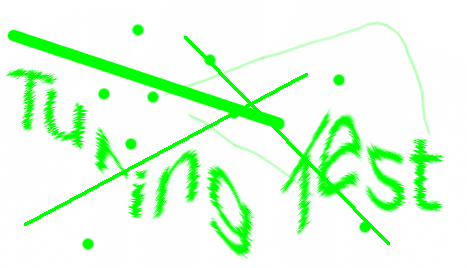 As text recognition software becomes better and better, these CAPTCHAs become more and more difficult to read by a human. The last time I tried to login, I was only able to type the right word on my fourth try. Very soon computers will be better than humans at parsing CAPTCHAs. Humans are loosing the race on visual methods like this one.

 In my days of competing in math, I met guys who could solve any geometry problem by using coordinates: first they would assign variables to represent coordinates of different points, then they would write and solve a set of equations. It seemed so boring. Besides, this approach doesn’t provide us with any new insight into geometry.
 discusses translations, rotations and reflections.
  — looks at similarity transformations, and
  talks about affine and projective transformations. A lot of beautiful problems with their solutions are scattered throughout these books. They include all my favorite problems related to transformations.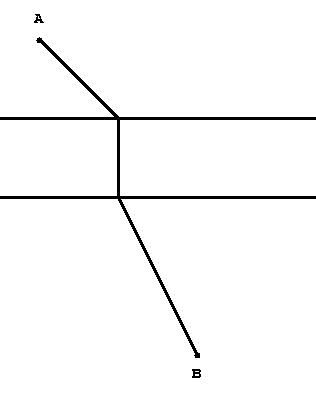


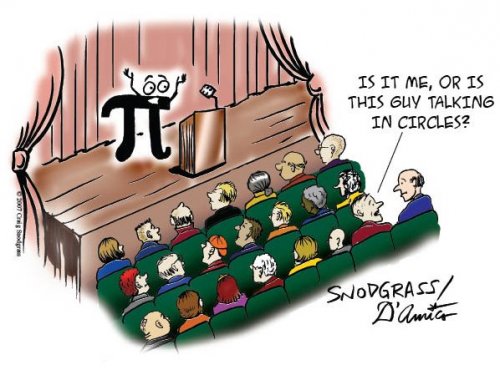 I added my favorite webcomics from




