Confusion about Vampires
Vampire numbers

My knowledge about vampires comes mostly from the two TV series Buffy The Vampire Slayer and Angel. If you saw these series you would know that vampires can’t stand the sun. Therefore, they can’t get any tan at all and should be very pale. Angel doesn’t look pale but I never saw him going to a tanning spa. Nor did I ever see him taking vitamin D, as he should if he’s avoiding the sun.

But this is not why I’m confused about vampires. My biggest concerns are about vampires that are numbers.

Vampire numbers were invented by Clifford A. Pickover, who said:

If we are to believe best-selling novelist Anne Rice, vampires resemble humans in many respects, but live secret lives hidden among the rest of us mortals. Consider a numerical metaphor for vampires. I call numbers like 2187 vampire numbers because they’re formed when two progenitor numbers 27 and 81 are multiplied together (27 * 81 = 2187). Note that the vampire, 2187, contains the same digits as both parents, except that these digits are subtly hidden, scrambled in some fashion.

Some people call the parents of a vampire number fangs. Why would anyone call their parents fangs? I guess some parents are good at blood sucking and because they have all the power, they make the lives of their children a misery. So which name shall we use: parents or fangs?

Why should parents have the same number of digits? Maybe it’s a gesture of gender equality. But there is no mathematical reason to be politically correct, that is, for parents to have the same number of digits. For example, 126 is 61 times 2 and thus is the product of two numbers made from its digits. Pickover calls 126 a pseudovampire. So a pseudovampire with asymmetrical fangs, is a disfigured vampire, one whose fangs have a different number of digits. Have you ever seen fangs with digits?

In the first book where vampires appeared Keys to Infinity the vampire numbers are called true vampire numbers as opposed to pseudovampire numbers.

We can add a zero at the end of a pseudovampire to get another pseudovampire, a trivial if obvious observation. To keep the parents equal, we can add two zeroes at the end of a vampire to get another vampire. Adding zeroes is not a very intellectual operation, but a vampire that can’t be created by adding zeroes to another vampire is more basic and, thus, more interesting. In the book Wonders of Numbers: Adventures in Mathematics, Mind, and Meaning a vampire where one of the multiplicands doesn’t have trailing zeroes is called a true vampire, as opposed to just a vampire. Thus, the trueness of vampires changes from book to book, adding some more confusion. It looks like the second definition of a true vampire is more widely adopted, so I will stick to it.

By analogy, we should call pseudovampires that do not end in zeroes, true pseudovampires. It’s interesting to note that by adding zeroes we can get a true vampire from any pseudovampire that is not a vampire. You see how easy it is to build equality? Just add zeroes.

A true vampire might not be true as a pseudovampire. For example, a vampire number 1260 = 20 * 61 is generated by adding a zero to a pseudovampire 126 = 2 * 61. In this case, the pseudovampire is truer than the vampire. Why does something more basic get a prefix “pseudo”?

Here’s another question. Why do vampires have to have two fangs? Can a vampire have three fangs? For example, 11439 = 9 * 31 * 41. This generalization of vampires should be called mutant vampires. Or multi-gender vampires.

To create more confusion, a mutant vampire can, at the same time, be a simple vampire: 1395 = 31 * 9 * 5 = 15 * 93.

Of course, nothing prevents a mutant vampire from being politically correct, that is, to have multiple and equal parents with the same number of digits, as in 197925 = 29 * 75 * 91.

People continue creating a mess with vampires. For example, a definition of a prime vampire number is floating around the Internet. When you look at this name, your first reaction is that a prime vampire is a prime number. But a vampire is never prime as it is always a product of numbers. By definition a prime vampire is a vampire with prime multiplicands, for example 124483 = 281 * 443. So “prime vampire number” is a very bad name. We should call these vampires prime-fanged vampires — this would be much more straightforward.

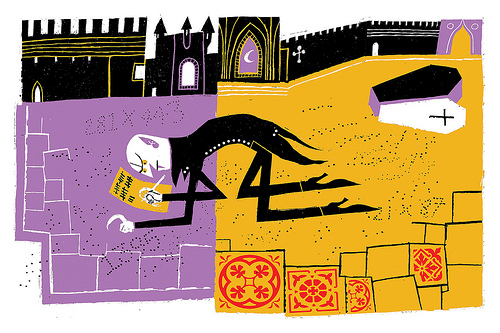
To eliminate some of this confusion, we mathematicians should go back and rename vampires consistently. But in the meantime, check out the illustration of vampire numbers shown above that I found at flickr.com with this description:

Like the count von Count in Sesame Street, there is a tradition that vampires suffer terribly from arithromania: the compulsion to count things. To keep vampires from wreaking murderous havoc at night, poppy seeds were strewn about their resting places. On waking, the vampire would be compelled to count the seeds. It would take him all night, and keep him from mischief.

My knowledge about vampires comes mostly from the two TV series Buffy The Vampire Slayer and Angel . If you saw these series you would know that vampires can’t stand the sun. Therefore, they can’t get any tan at all and should be very pale. Angel doesn’t look pale but I never saw him going to a tanning spa. Nor did I ever see him taking vitamin D, as he should if he’s avoiding the sun.

But this is not why I’m confused about vampires. My biggest concerns are about vampires that are numbers.

Vampire numbers were invented by Clifford A. Pickover, who said:

If we are to believe best-selling novelist Anne Rice , vampires resemble humans in many respects, but live secret lives hidden among the rest of us mortals. Consider a numerical metaphor for vampires. I call numbers like 2187 vampire numbers because they’re formed when two progenitor numbers 27 and 81 are multiplied together (27 * 81 = 2187). Note that the vampire, 2187, contains the same digits as both parents, except that these digits are subtly hidden, scrambled in some fashion.

Some people call the parents of a vampire number fangs. Why would anyone call their parents fangs? I guess some parents are good at blood sucking and because they have all the power, they make the lives of their children a misery. So which name shall we use: parents or fangs?

Why should parents have the same number of digits? Maybe it’s a gesture of gender equality. But there is no mathematical reason to be politically correct, that is, for parents to have the same number of digits. For example, 126 is 61 times 2 and thus is the product of two numbers made from its digits. Pickover calls 126 a pseudovampire. So a pseudovampire with asymmetrical fangs, is a disfigured vampire, one whose fangs have a different number of digits. Have you ever seen fangs with digits?

In the first book where vampires appeared Keys to Infinity the vampire numbers are called true vampire numbers as opposed to pseudovampire numbers.

We can add a zero at the end of a pseudovampire to get another pseudovampire, a trivial if obvious observation. To keep the parents equal, we can add two zeroes at the end of a vampire to get another vampire. Adding zeroes is not a very intellectual operation, but a vampire that can’t be created by adding zeroes to another vampire is more basic and, thus, more interesting. In the book Wonders of Numbers: Adventures in Mathematics, Mind, and Meaning a vampire where one of the multiplicands doesn’t have trailing zeroes is called a true vampire, as opposed to just a vampire. Thus, the trueness of vampires changes from book to book, adding some more confusion. It looks like the second definition of a true vampire is more widely adopted, so I will stick to it.

By analogy, we should call pseudovampires that do not end in zeroes, true pseudovampires. It’s interesting to note that by adding zeroes we can get a true vampire from any pseudovampire that is not a vampire. You see how easy it is to build equality? Just add zeroes.

A true vampire might not be true as a pseudovampire. For example, a vampire number 1260 = 20 * 61 is generated by adding a zero to a pseudovampire 126 = 2 * 61. In this case, the pseudovampire is truer than the vampire. Why does something more basic get a prefix “pseudo”?

Here’s another question. Why do vampires have to have two fangs? Can a vampire have three fangs? For example, 11439 = 9 * 31 * 41. This generalization of vampires should be called mutant vampires. Or multi-gender vampires.

To create more confusion, a mutant vampire can, at the same time, be a simple vampire: 1395 = 31 * 9 * 5 = 15 * 93.

Of course, nothing prevents a mutant vampire from being politically correct, that is, to have multiple and equal parents with the same number of digits, as in 197925 = 29 * 75 * 91.

People continue creating a mess with vampires. For example, a definition of a prime vampire number is floating around the Internet. When you look at this name, your first reaction is that a prime vampire is a prime number. But a vampire is never prime as it is always a product of numbers. By definition a prime vampire is a vampire with prime multiplicands, for example 124483 = 281 * 443. So “prime vampire number” is a very bad name. We should call these vampires prime-fanged vampires — this would be much more straightforward.

To eliminate some of this confusion, we mathematicians should go back and rename vampires consistently. But in the meantime, check out the illustration of vampire numbers shown above that I found at flickr.com with this description:

Like the count von Count in Sesame Street, there is a tradition that vampires suffer terribly from arithromania: the compulsion to count things. To keep vampires from wreaking murderous havoc at night, poppy seeds were strewn about their resting places. On waking, the vampire would be compelled to count the seeds. It would take him all night, and keep him from mischief.


Share:Facebooktwitterredditpinterestlinkedinmail

Probability Theory for Crooks

It is unfortunate that crooks understand probability. Here is a scam that was very popular back in Russia.

A bad guy pretends that he has a close relative on the hiring committee of a college. He takes bribes from prospective students, promising to help them pass the entrance exams at this college. He doesn’t guarantee the admission, but he guarantees the money back. After getting the money, he does nothing. If the student passes the entrance exams, he keeps the money. If not, he returns the money. Simple probability — someone will pass the exams by chance, making him a lot of money.

Here is another Russian scam. This time the crooks have some understanding of conditional probability. These “psychics” promise to correctly predict the gender of your future child. They tell you a random gender, but for their bookkeeping they file the opposite gender. This way, even if you complain, they still keep your money. They show you their books and pressure you into believing that you misunderstood, misheard or misremembered the answer. The probability that you complain if they are right is zero.

Let us all learn probability theory to recognize scams and not fall for them.

Share:Facebooktwitterredditpinterestlinkedinmail

China Girls Math Olympiad

China Girls Math Olympiad is becoming an international math Olympiad for girls. When I first heard about this competition I felt very sad. I need to explain myself here.

For many years I felt very proud that math Olympiads do not separate the genders. Most Olympic sports, like running or swimming, have separate competitions for men and women. I felt that joint competitions for math demonstrated the spirit of equality in our math community. I felt that insofar as gender didn’t matter, mathematics was more democratic than other sports.

At the same time I do understand how people might assume for the following reasons that a math competition among only girls would be useful:

  • They promote the idea of math to girls.
  • They can help girls who are into math to feel less lonely.
  • They generate additional resources and training for girls.
  • They might be less stressful for some girls, than mixed math competitions.
  • They help promote the image of female mathematicians to society
  • They provide further opportunities for girls to earn prizes and improve their resumes.

See also the article: First US Team to Compete in the China Girls Mathematical Olympiad.

On the other hand, this development scares me. If we have a separate girls Olympiad, will that soon lead us to have two Olympiads, one for boys and one for girls? Two separate Olympiads would be a defeat for women mathematicians. Or, maybe I shouldn’t be scared. The percentage of girls at the most prestigious mathematics competition, the International Mathematical Olympiad, is so small that it can be viewed as virtually boys-only.

Mathematics is becoming similar to chess. There is a World Chess Championship where both men and women are allowed to compete, and there is a separate Women’s World Chess Championship. The interesting part is that Judith Polgar, by far the strongest female chess player in history, never competed in the Women’s World Chess Championship. I suspect that I understand Judith. She probably feels that women-only competitions diminish her, or that chess is about chess, not about gender. In any case, I hope that one day the separate girls Olympiad will not be needed.

Share:Facebooktwitterredditpinterestlinkedinmail

Another Two Coins Puzzle

Browsing Braingle I stumbled upon a standard probability puzzle which is very often misunderstood:

Suppose I flip two coins without letting you see the outcome, and I tell you that at least one of the coins came up heads. What is the probability that the other coin is also heads?

The standard “wrong” answer is 1/2. Supposedly, the right answer is 1/3. Here is the explanation for that “right” answer:

For two coins there are four equally probable outcomes: HH, HT, TH and TT. Obviously, TT is excluded in this case, and of the remaining three possibilities only one has two heads.

Here is the problem with this problem. Suppose I flip two coins without letting you see the outcome. If I get one head and one tail, what will I tell you? I can tell you that at least one of the coins came up heads. Or, I can tell you that at least one of the coins came up tails. The fact that I can tell you different things changes the a posteriori probabilities.

You need to base your calculation not only on your knowledge that there are only three possibilities for the outcome: HH, HT and TH, but also on the conditional probabilities of these outcomes, given what I told you. I claim that the initial problem is undefined and the answer depends on what I decide to say in each different case.

Let us consider the first of two strategies I might use:

I flip two coins. If I get two heads, I tell you that I have at least one head. If I get two tails I tell you that I have at least one tail. If I get one head and one tail, then I will tell you one of the above with equal probability.

Given that I told you that I have at least one head, what is the probability that I have two heads? I leave it to my readers to calculate it.

Suppose I follow the other strategy:

I flip two coins. If I get two tails, I say, “Oops. It didn’t work.” Otherwise, I say that I have at least one head.

Given that I told you that I have at least one head, what is the probability that I have two heads? If you calculate answers for both strategies correctly, you will have two different answers. That means the problem is not well-defined in the first place.

Share:Facebooktwitterredditpinterestlinkedinmail

Statistics Homework

Teacher: Why didn’t you do your statistics homework?
Student: I read a statistical study that the students who spend more time on their homework get lower grades.
Teacher: So you didn’t do your homework in order to increase your grades?
Student: Yep.
Teacher: I have been teaching you that correlation doesn’t mean causality. Did it ever occur to you that students with good grades already know some of the material and they do not need much time to complete their homework?
Student: Oh?
Teacher: You are getting an F for not doing your homework. Now you might understand causality better.

Share:Facebooktwitterredditpinterestlinkedinmail

My IQ

When I came to the US, I heard about Mensa — the high IQ society. My IQ had never been tested, so I was curious. I was told that there was a special IQ test for non-English speakers and that my fresh immigrant status and lack of English knowledge was not a problem. I signed up.

There were two tests. One test had many rows of small pictures, and I had to choose the odd one out in each row. That was awful. The test was English-free, but it wasn’t culture-free. I couldn’t identify some of the pictures at all. We didn’t have such things in Russia. I remember staring at a row of tools that could as easily have been from a kitchen utensil drawer as from a garage tool box. I didn’t have a clue what they were.

But the biggest problem was that the idea of crossing the odd object out seems very strange to me in general. What is the odd object out in this list?

Cow, hen, pig, sheep.

The standard answer is supposed to be hen, as it is the only bird. But that is not the only possible correct answer. For example, pig is the only one whose meat is not kosher. And, look, sheep has five letters while the rest have three.

Thus creative people get fewer points. That means, IQ tests actually measure how standard and narrow your mind is.

The second test asked me to continue patterns. Each page had a three-by-three square of geometric objects. The bottom right corner square, however, was empty. I had to decide how to continue the pattern already established by the other eight squares by choosing from a set of objects they provided.

This test is similar to continuing a sequence. How would you continue the sequence 1,2,3,4,5,6,7,8,9? The online database of integer sequences has 1479 different sequences containing this pattern. The next number might be:

  • 10, if this is the sequence of natural numbers;
  • 1, if this is the sequence of the digital sums of natural numbers;
  • 11, if this the sequence of palindromes;
  • 0, if this is the sequence of digital products of natural numbers;
  • 13, if this is the sequence of numbers such that 2 to their powers doesn’t contain 0;
  • 153, if this is the sequence of numbers that are sums of fixed powers of their digits;
  • 22, if this is the sequence of numbers for which the sum of digits equals the product of digits; or
  • any number you want.

Usually when you are asked to continue a pattern the assumption is that you are supposed to choose the simplest way. But sometimes it is difficult to decide what the testers think the simplest way is. Can you replace the question mark with a number in the following sequence: 31, ?, 31, 30, 31, 30, 31, … You might say that the answer is 30 as the numbers alternate; or, you might say that the answer is 28 as these are the days of the month.

Towards the end of my IQ test, the patterns were becoming more and more complicated. I could have supplied several ways to continue the pattern, but my problem was that I wasn’t sure which one was considered the simplest.

When I received my results, I barely made it to Mensa. I am glad that I am a member of the society of people who value their brains. But it bugs me that I might not have been creative enough to fail their test.

Share:Facebooktwitterredditpinterestlinkedinmail

The Women and Math Program

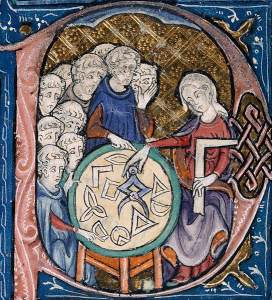
Woman teaching geometryI am looking forward to the 2009 Women and Math program at Princeton. The irony is that I lived in Princeton for seven years and the only time I visited this program was for the lecture course on wavelets by Ingrid Daubechies.

I felt that mathematics should be genderless and pure; that the only basis for a program should be mathematics itself. I tried to ignore the problems of women mathematicians by pretending they didn’t exist. By the time I realized that I might very well love to hang out with a large group of female mathematicians, I left Princeton.

Can you imagine how glad I was when I got a call inviting me to join the organizing committee for the Women and Mathematics Program last year? I was so eager that I arranged a math party at the Program and gave my own talk about Topology in Art.

What can I tell you? I loved the program. For the first time in my life I didn’t feel like a loner, but rather that I belonged to a group. I also felt envious, because when I was a student we didn’t have anything like this in Russia.

I am going to be on the program this year too. The subject is Geometric PDE. I am so looking forward to it that I’m already planning another math party.

Share:Facebooktwitterredditpinterestlinkedinmail

Safer Parking

Once I was at a party and a woman was complaining that her car insurance bills were enormous. Her expensive car was hit three times while it was parked. She was whining about how unfair it was for her to be paying increased insurance premiums when it hadn’t been her fault. I didn’t tell her my opinion then, but I’m going to write about it now.

Though such things can happen, it is possible to reduce the probability of your parked car being hit.

In my personal experience the most frequent parking accident happens when someone backs out of a driveway and there is a car parked in a space which is usually empty. People often back out of their driveways on autopilot. If you park on a narrow street with no other cars — a sign that people don’t usually park there, do not park across from a driveway or close to a driveway.

There are many other common sense ideas. Don’t park at a corner. Choose the better lit areas. Don’t park next to a truck or a van, because they might not see you very well and if they hit you, they’ll do more damage. Don’t park next to an old, battered car because they have less to lose than you do. New cars are the best neighbors. Not only are owners of new cars usually more careful, but new cars are also often leased. And people who lease a car are even more careful, because they have to return it in good order.

When you are choosing a perpendicular parking spot, here’s a cute idea. Pick cars with four doors as your neighbors. Cars with two doors have bigger doors and if you are too close, they might scratch you.

Here’s what I would have told that woman: If your car has been hit so many times while parked, you should rethink your parking strategy.

Share:Facebooktwitterredditpinterestlinkedinmail

Two Coins Puzzle

Browsing the Internet, I stumbled upon a coin puzzle which I slightly shrank to emphasize my point:

Carl flipped two coins and was asked if at least one of the two coins landed “heads up”. He replied, “Yes. In fact the first coin I flipped landed heads up.” What is the chance that Carl’s coins both landed heads up?

The standard answer is 1/2, because there are only two possibilities for the coin flips: HH and HT. But how do we know that these possibilities are equally probable?

The answer depends on what we expect Carl to say when he flips two heads. My personal assumption is that Carl is a perfectionist and always volunteers extra information. If Carl gets two heads, I would expect him to say, “Yes. In fact both coins I flipped landed heads up.” In this case the answer to the puzzle is 0.

Another strange but reasonable assumption is that upon flipping two heads, there is an equal probability that Carl would say either, “Yes. In fact the first coin I flipped landed heads up;” or, “Yes. In fact the second coin I flipped landed heads up.” In this case, the answer to the puzzle is 1/3.

I could describe an assumption for Carl’s answering strategy that leads to the puzzle’s answer of 1/2, but it looks too artificial to me.

This puzzle is not well-defined, but unfortunately there are many versions of it floating around the Internet with incorrect solutions.

Share:Facebooktwitterredditpinterestlinkedinmail

How I Chose My Math Adviser

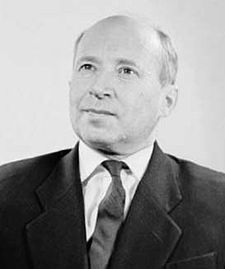
Israel GelfandOne day I got a phone call from Victor Gutenmacher, one of the members of the jury for the USSR Math Olympiad. At that time I was 15 and had won two gold medals at the Soviet Math Olympics. Victor asked me about my math education. I explained to him that although I went to a special school for gifted children, I wasn’t doing anything else. In his opinion, other kids were using more advanced mathematics for their proofs than I was. He said I was coloring everything in black and white; other kids were using calculus, while I was only using elementary math. He asked me if I would like to learn more sophisticated mathematics.

I said, “Sure.” After considering several different options, Victor suggested Israel Gelfand’s seminar at Moscow State University. He told me that this seminar might suit me because it starts slowly, picking up pace only at the end. He also told me that the seminar was like a theater. Little did I know that I would become a part of this theater for many years to come. I also didn’t know that I would meet my third husband, Joseph Bernstein, at this seminar. Joseph used to sit in the front row, and I watched his back at the seminar for more years than I later spent together with him.

The next Monday evening, I went to the seminar for the first time. Afterwards, Gelfand approached me and asked me if I had an academic adviser. I said, “No.” He asked me how old I was. I said, “Fifteen.” He told me that I was too old and that I had to choose an adviser without delay. I said, “But I do not know anyone and, besides, I need some time to think about it.” He replied, “I’ll give you two minutes.”

I paced the halls of the 14th floor of the Moscow State University for a couple of minutes, pretending to think. But really, I didn’t know about any other options. He was the only math adviser I had ever met. So I came back and asked Gelfand, “Will you be my adviser?”

He agreed and remained my adviser until I got my PhD 14 years later.

Share:Facebooktwitterredditpinterestlinkedinmail